

Category





Biology, Life Sciences
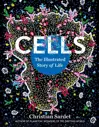
Cells 2025
In the fifteenth century, as astronomers charted the skies and explorers mapped the globe, the nature of life itself remained a mystery. It wasn’t until the seventeenth century that Robert Hooke, looking through one of the earliest microscopes, coined the term cell. Nearly two centuries later,...
In the United States alone, one in five adults experiences chronic pain. For too long, when a doctor couldn’t find the source of frequent pain, the patient was dismissively told “it’s all in your head.” Today, we know that our somatic responses to trauma, anxiety, and depression create real...
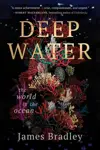
Deep Water 2024
In this thrilling work—a blend of history, science, nature writing, and environmentalism—acclaimed writer James Bradley plunges into the unknown to explore the deepest recesses of the natural world.
Seventy-one percent of the earth’s surface is ocean. These waters created, shaped, and continue to...
A reflective collection of personal essays and memoir fragments, the book gathers the final writings of a neurologist who spent his life observing the strange, fragile beauty of the human mind. Through memories of patients, scientific curiosity, and his own early experiences, he revisits the moments...
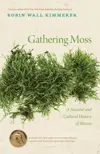
Gathering Moss 2003
Living at the limits of our ordinary perception, mosses are a common but largely unnoticed element of the natural world. Gathering Moss is a beautifully written mix of science and personal reflection that invites readers to explore and learn from the elegantly simple lives of mosses.
In this series...
Hidden Creatures 2026
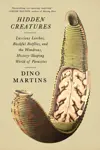
There is the tapeworm, which can grow 120 feet in length within the gut of a whale; the tsetse fly, a notorious vector of disease that can pierce the skin even of crocodiles with its needle-like mouth; and the most universal symbol of parasitic behavior: the leech. Long villainized as, well,...
Intelligent Thought 2006
Evolutionary science lies at the heart of a modern understanding of the natural world. Darwin’s theory has withstood 150 years of scientific scrutiny, and today it not only explains the origin and design of living things, but highlights the importance of a scientific understanding in our culture and...
Life 2016
The newest addition to John Brockman’s Edge.org series explores life itself, bringing together the world’s leading biologists, geneticists, and evolutionary theorists—including Richard Dawkins, Edward O. Wilson, J. Craig Venter, and Freeman Dyson.
Scientists’ understanding of life is progressing...
The Life Machines 2026
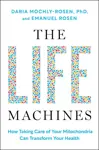
Have you ever wondered what makes every heartbeat, every thought, and every movement possible? Meet your mitochondria—tiny but mighty organelles that are the true engines of life. These organelles are popularly known as the “powerhouses of the cell,” but new research shows that the mitochondria do...
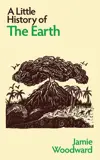
A lively account of the history of our planet, from its earliest origins to the present day, told through the major geological changes and scientific breakthroughs.
Where has our planet come from, and what lies beneath its surface? How have we come to understand its past and present environments,...
Living on Earth 2025
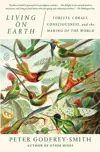
While humans have occupied the Earth for only a small part of its history, life itself has been here for much longer—more than a quarter of the universe’s time span. Life is a long-term tenant on Earth, and one that has profoundly transformed our world. What have these organisms—bacteria, animals,...
The Mind 2011
Marking the debut of a hard-hitting new series from Edge.org and Harper Perennial, editor John Brockman delivers a cutting-edge master class covering everything you need to know about The Mind. With original contributions by the world’s leading thinkers and scientists, including Steven Pinker,...
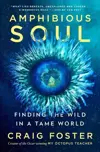
Amphibious Soul 2024
How can we reclaim the soul-deepening wildness that grounds us and energizes us when so much of the modern world seems designed to tame us?
In this thrilling memoir of a life spent exploring the most incredible places on Earth—from the Great African Seaforest to the crocodile lairs of the Okavango...
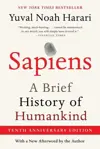
Sapiens 2025
One hundred thousand years ago, at least six human species inhabited the earth. Today there is just one. Us. Homo sapiens. How did our species succeed in the battle for dominance? Why did our foraging ancestors come together to create cities and kingdoms? How did we come to believe in gods, nations,...
Editor John Brockman continues in the same vein as his popular compilations What Are You Optimistic About and What Have You Changed Your Mind About with This Will Change Everything. Brockman asks 150 intellectual superstars “what game-changing scientific ideas and developments do you expect to live...
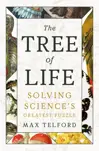
The Tree of Life 2025
Are humans really fish? Why are we the only animals with chins? How much of our DNA do we share with the trillions of bacteria in our bodies?
For centuries, scientists have chased the secrets of how life on our planet arose, how it assumed its dazzling diversity of forms, and how we humans are...
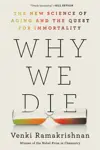
Why We Die 2025
The knowledge of death is so terrifying that we live most of our lives in denial of it. One of the most difficult moments of childhood must be when each of us first realizes that not only we but all our loved ones will die—and there is nothing we can do about it.
Or at least, there hasn’t been....
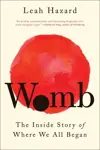
Womb 2024
A groundbreaking, triumphant investigation of the uterus—from birth to death, in sickness and in health, throughout history and into our possible future—from midwife and acclaimed writer Leah Hazard.
The size of a clenched fist and the shape of a light bulb—with no less power and potential. Every...
A reflective collection of personal essays and memoir fragments, the book gathers the final writings of a neurologist who spent his life observing the strange, fragile beauty of the human mind. Through memories of patients, scientific curiosity, and his own early experiences, he revisits the moments...
The Life Machines November 3, 2026
Have you ever wondered what makes every heartbeat, every thought, and every movement possible? Meet your mitochondria—tiny but mighty organelles that are the true engines of life. These organelles are popularly known as the “powerhouses of the cell,” but new research shows that the mitochondria do...
Hidden Creatures July 7, 2026
There is the tapeworm, which can grow 120 feet in length within the gut of a whale; the tsetse fly, a notorious vector of disease that can pierce the skin even of crocodiles with its needle-like mouth; and the most universal symbol of parasitic behavior: the leech. Long villainized as, well,...
A Little History of the Earth December 9, 2025
A lively account of the history of our planet, from its earliest origins to the present day, told through the major geological changes and scientific breakthroughs.
Where has our planet come from, and what lies beneath its surface? How have we come to understand its past and present environments,...
Change Your Brain, Change Your Pain December 2, 2025
In the United States alone, one in five adults experiences chronic pain. For too long, when a doctor couldn’t find the source of frequent pain, the patient was dismissively told “it’s all in your head.” Today, we know that our somatic responses to trauma, anxiety, and depression create real...
Cells December 2, 2025
In the fifteenth century, as astronomers charted the skies and explorers mapped the globe, the nature of life itself remained a mystery. It wasn’t until the seventeenth century that Robert Hooke, looking through one of the earliest microscopes, coined the term cell. Nearly two centuries later,...
The Tree of Life November 11, 2025
Are humans really fish? Why are we the only animals with chins? How much of our DNA do we share with the trillions of bacteria in our bodies?
For centuries, scientists have chased the secrets of how life on our planet arose, how it assumed its dazzling diversity of forms, and how we humans are...
Living on Earth September 2, 2025
While humans have occupied the Earth for only a small part of its history, life itself has been here for much longer—more than a quarter of the universe’s time span. Life is a long-term tenant on Earth, and one that has profoundly transformed our world. What have these organisms—bacteria, animals,...
Why We Die February 18, 2025
The knowledge of death is so terrifying that we live most of our lives in denial of it. One of the most difficult moments of childhood must be when each of us first realizes that not only we but all our loved ones will die—and there is nothing we can do about it.
Or at least, there hasn’t been....
Sapiens February 4, 2025
One hundred thousand years ago, at least six human species inhabited the earth. Today there is just one. Us. Homo sapiens. How did our species succeed in the battle for dominance? Why did our foraging ancestors come together to create cities and kingdoms? How did we come to believe in gods, nations,...
Deep Water July 2, 2024
In this thrilling work—a blend of history, science, nature writing, and environmentalism—acclaimed writer James Bradley plunges into the unknown to explore the deepest recesses of the natural world.
Seventy-one percent of the earth’s surface is ocean. These waters created, shaped, and continue to...
Amphibious Soul May 14, 2024
How can we reclaim the soul-deepening wildness that grounds us and energizes us when so much of the modern world seems designed to tame us?
In this thrilling memoir of a life spent exploring the most incredible places on Earth—from the Great African Seaforest to the crocodile lairs of the Okavango...
Womb February 27, 2024
A groundbreaking, triumphant investigation of the uterus—from birth to death, in sickness and in health, throughout history and into our possible future—from midwife and acclaimed writer Leah Hazard.
The size of a clenched fist and the shape of a light bulb—with no less power and potential. Every...
Everything in Its Place March 31, 2020
A reflective collection of personal essays and memoir fragments, the book gathers the final writings of a neurologist who spent his life observing the strange, fragile beauty of the human mind. Through memories of patients, scientific curiosity, and his own early experiences, he revisits the moments...
Life April 19, 2016
The newest addition to John Brockman’s Edge.org series explores life itself, bringing together the world’s leading biologists, geneticists, and evolutionary theorists—including Richard Dawkins, Edward O. Wilson, J. Craig Venter, and Freeman Dyson.
Scientists’ understanding of life is progressing...
The Mind August 16, 2011
Marking the debut of a hard-hitting new series from Edge.org and Harper Perennial, editor John Brockman delivers a cutting-edge master class covering everything you need to know about The Mind. With original contributions by the world’s leading thinkers and scientists, including Steven Pinker,...
This Will Change Everything December 22, 2009
Editor John Brockman continues in the same vein as his popular compilations What Are You Optimistic About and What Have You Changed Your Mind About with This Will Change Everything. Brockman asks 150 intellectual superstars “what game-changing scientific ideas and developments do you expect to live...
Intelligent Thought May 9, 2006
Evolutionary science lies at the heart of a modern understanding of the natural world. Darwin’s theory has withstood 150 years of scientific scrutiny, and today it not only explains the origin and design of living things, but highlights the importance of a scientific understanding in our culture and...
Gathering Moss March 1, 2003
Living at the limits of our ordinary perception, mosses are a common but largely unnoticed element of the natural world. Gathering Moss is a beautifully written mix of science and personal reflection that invites readers to explore and learn from the elegantly simple lives of mosses.
In this series...