

Category















History of the Americas
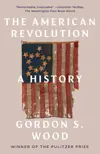
When Abraham Lincoln sought to define the significance of the United States, he naturally looked back to the American Revolution. He knew that the Revolution not only had legally created the United States, but also had produced all of the great hopes and values of the American people. Our noblest...
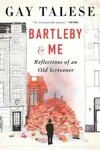
Bartleby and Me 2024
"New York is a city of things unnoticed," a young reporter named Gay Talese wrote sixty years ago. He would spend the rest of his legendary career defying that statement by celebrating the people most reporters overlooked, understanding that it was through these minor characters that the epic story...
Bea wakes to Daddy’s note in a hayloft, where he abandoned her with her little sister after the stock market crash took everything: Daddy’s job at the bank, their home, Mama’s health and life.
How is Bea supposed to convince the imposing Mrs. Scott to take in two stray children? Mrs. Scott’s money...
In Beyond the Hundredth Meridian, Wallace Stegner recounts the sucesses and frustrations of John Wesley Powell, the distinguished ethnologist and geologist who explored the Colorado River, the Grand Canyon, and the homeland of Indian tribes of the American Southwest. A prophet without honor who had...
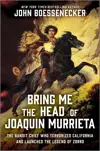
Joaquin Murrieta’s story is one for the ages. Fiercely compelling and epically woven, *Bring Me the Head of Joaquin Murrieta* details the bloody saga of the Latino outlaw.
In myth, he embarked on a noble career as a rebel, fighting against injustice in the rough-and-tumble Wild West. However,...
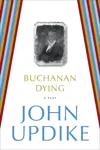
Buchanan Dying 2013
To the list of John Updike’s well-intentioned protagonists—Rabbit Angstrom, Richard Maple, Henry Bech—add James Buchanan, the harried fifteenth president of the United States (1857–1861). In what the author calls “a kind of novel, conceived in the form of a play,” Buchanan’s political and private...
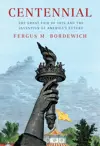
Centennial 2026
The spectacular story of the Great Centennial Exhibition of 1876, a world's fair to mark America’s hundredth birthday—and a moment of reckoning for a nation barrelling toward the Gilded Age.
“Those who were there felt that the wheel of history itself had turned before their eyes.” Held at...
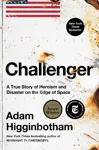
Challenger 2024
On January 28, 1986, just seventy-three seconds into flight, the space shuttle Challenger broke apart over the Atlantic Ocean, killing all seven people on board. Millions of Americans witnessed the tragic deaths of the crew, which included New Hampshire schoolteacher Christa McAuliffe. Like the...
Cotton Tenants 2013
In 1941, James Agee and Walker Evans published Let Us Now Praise Famous Men, a four-hundred-page prose symphony about three tenant farming families in Hale County, Alabama at the height of the Great Depression. The book shattered journalistic and literary conventions. Critic Lionel Trilling called...
The Creation of the American Republic, 1776-1787 examines the political and intellectual transformation that took place in the United States between the Declaration of Independence and the adoption of the Constitution. Gordon S. Wood explores how American leaders and citizens grappled with the...
At the beginning of 1776, virtually no one in the colonies was advocating independence: Americans based their grievances against Parliament on their rights as British subjects.
By the end of 1776, independence was on every patriot’s lips. The many tyrannies of a king had made an independent...
The Demon of Unrest 2026
On November 6, 1860, Abraham Lincoln became the fluky victor in a tight race for president. The country was bitterly at odds; Southern extremists were moving ever closer to destroying the Union, with one state after another seceding and Lincoln powerless to stop them. Slavery fueled the conflict,...
Two men, each handsome and unusually adept at his chosen work, embodied an element of the great dynamic that characterized America’s rush toward the twentieth century. The architect was Daniel Hudson Burnham, the fair’s brilliant director of works and the builder of many of the country’s most...
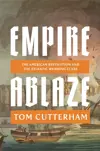
Empire Ablaze 2026
In 1776, while Britain wages war on American rebels, one man sets out to bring the empire down from within.
As revolution raged in North America, James Aitken – house painter, highwayman, and escaped indentured servant – wandered the colonies, formulating a dramatic plan to cripple the British...
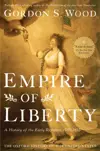
Empire of Liberty 2011
As Wood reveals, the period was marked by tumultuous change in all aspects of American life--in politics, society, economy, and culture. The men who founded the new government had high hopes for the future, but few of their hopes and dreams worked out quite as they expected. They hated political...
Everything Is Now 2026
Like Paris in the 1920s, New York City in the 1960s was a cauldron of avant-garde ferment and artistic innovation. Boundaries were transgressed and new forms created. Drawing on interviews, memoirs, and the alternative press, Everything Is Now chronicles this collective drama as it was played out in...
Fault Lines 2025
In this fully updated second edition of their masterful history, leading historians and best-selling authors Kevin M. Kruse and Julian E. Zelizer uncover the origins of our current moment, answering the question: When—and how—did America become so polarized?
It all starts in 1974 with the Watergate...
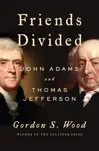
Friends Divided 2017
Thomas Jefferson and John Adams could scarcely have come from more different worlds, or been more different in temperament. Jefferson, the optimist with enough faith in the innate goodness of his fellow man to be democracy's champion, was an aristocratic Southern slaveowner, while Adams, the...
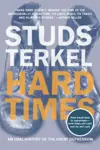
Hard Times 2005
In this “invaluable record” of one of the most dramatic periods in modern American history, Studs Terkel recaptures the Great Depression of the 1930s in all its complexity. Featuring a mosaic of memories from politicians, businessmen, artists, striking workers, and Okies, from those who were just...
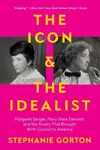
A riveting history about the little-known rivalry between Margaret Sanger and Mary Ware Dennett that profoundly shaped reproductive rights in America.
In the 1910s, as the birth control movement was born, two leaders emerged: Margaret Sanger and Mary Ware Dennett. While Sanger would go on to found...
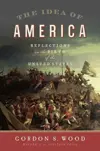
The Idea of America 2011
More than almost any other nation in the world, the United States began as an idea. For this reason, Pulitzer Prize-winning historian Gordon S. Wood believes that the American Revolution is the most important event in our history, bar none. Since American identity is so fluid and not based on any...
Isaac's Storm 2000
September 8, 1900, began innocently in the seaside town of Galveston, Texas. Even Isaac Cline, resident meteorologist for the U.S. Weather Bureau failed to grasp the true meaning of the strange deep-sea swells and peculiar winds that greeted the city that morning. Mere hours later, Galveston found...
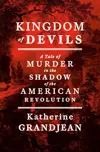
Kingdom of Devils 2026
Kentucky, 1798: A harrowing series of murders begins. The first body, discovered by cattle drovers, lies bloody at the bottom of a ridge. Then another—a dead boy staring up from a sinkhole. Bodies turn up along roadsides, stuffed into brush. They float to the surface of muddy brooks. For nine...
Designed for young readers, this illustrated history recounts the events that led to the surrender of the Confederacy, and the personalities involved.
From the Pulitzer Prize winning author of Andersonville comes the story of an unforgettable moment in American history: the historic meeting between...
Pulitzer Prize-winning author James Agee and renowned photgrapher Walker Evans's Let Us Now Praise Famous Men is a landmark work of American photojournalism “renowned for its fusion of social conscience and artistic radicality" (The New York Times)
In the summer of 1936, James Agee and Walker Evans...
On April 16, 1923, Dr.. Martin Luther King Jr., responded to an open letter written and published by eight white clergyman admonishing the civil rights demonstrations happening in Birmingham, Alabama.
Dr.. King drafted his seminal response on scraps of paper smuggled into jail. King criticizes his...
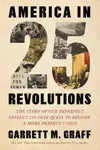
When Thomas Jefferson penned his creed, “all men are created equal,” it was a phrase far less universal than it first appeared. Excluded were women, enslaved Black people, poor whites, Native Americans, and other groups. It was, nonetheless, a revolutionary statement for its time, an assertion of...
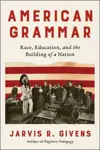
American Grammar 2025
A new history of US education through the nineteenth century that rigorously accounts for Black, Native, and white experiences; a story that exposes the idea of American education as “the great equalizer” to not only be a lie, but also a myth that reproduces past harms.
Education is the epicenter...
American Passage 2015
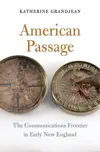
New England was built on letters. Its colonists left behind thousands of them, brittle and browning and crammed with curls of purplish script. How they were delivered, though, remains mysterious. We know surprisingly little about the way news and people traveled in early America. No postal service...
America's Fatal Leap 2026
A decisive analytic critique of US foreign policy by one of America’s greatest historians.
America's Fatal Leap deconstructs US geopolitics after the end of the Cold War, informed by its author's unsurpassed command of modern history. Paul W. Schroeder, an acclaimed historian of international...
The Middle Passage 2002
In 1960 the government of Trinidad invited V. S. Naipaul to revisit his native country and record his impressions. In The Middle Passage, Naipaul watches a Trinidadian movie audience greeting Humphrey Bogart’s appearance with cries of “That is man!” He ventures into a Trinidad slum so insalubrious...
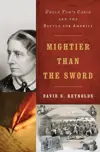
Uncle Tom's Cabin is likely the most influential novel ever written by an American. In a fitting tribute to the two hundredth anniversary of Harriet Beecher Stowe's birth, Bancroft Prize-winning historian David S. Reynolds reveals her book's impact not only on the abolitionist movement and the...
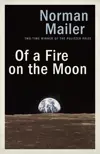
For many, the moon landing was the defining event of the twentieth century. So it seems only fitting that Norman Mailer—the literary provocateur who altered the landscape of American nonfiction—wrote the most wide-ranging, far-seeing chronicle of the Apollo 11 mission.
A classic chronicle of...
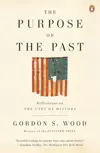
With The Purpose of the Past, Wood has essentially created a history of American history, assessing the current state of the narrative vis-à-vis the work of some of its most important scholars—doling out praise and scorn with equal measure.
In this wise, passionate defense of history's ongoing...
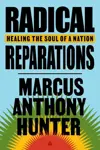
Radical Reparations 2024
For over a century, the idea of reparations for the descendants of enslaved Black Americans has divided the United States. However, while the iconic phrase "40 acres and a mule" encapsulates the general notion of reparations, history has proven that the damages of enslavement on the African American...
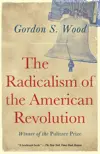
In a grand and immensely readable synthesis of historical, political, cultural, and economic analysis, a prize-winning historian describes the events that made the American Revolution.
Gordon S. Wood depicts a revolution that was about much more than a break from England; rather, it transformed an...
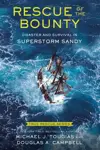
Rescue of the Bounty 2025
On October 23, 2012, with Superstorm Sandy fast approaching, Captain Robin Walbridge made the fateful decision to sail the HMS Bounty from New London, Connecticut to St. Petersburg, Florida, believing the wooden ship, a replica of the original, famous Bounty, would fare better at sea than at port....
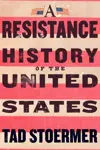
Revisit the Salem Witch Trials, the Underground Railroad, and other resistance movements of American history to get a bold new understanding of how resistance shaped our past—and how its principles can change our future.
The United States was shaped by resistance—but not in the way we’ve been...
In this brilliantly illuminating group portrait of the men who came to be known as the Founding Fathers, the incomparable Gordon Wood has written a book that seriously asks, What made these men great, and shows us, among many other things, just how much character did in fact matter.
The life of...
A deeply researched, narrative history recounting the little-known late–Reconstruction era mission of General Philip Sheridan, a Union Army hero dispatched to the South ten years after the Civil War to protect the rights of newly freed black citizens, who were under siege by violent paramilitary...
When people visit me, they are free—to run, play, gather, and rejoice. They built me to remember. On June 19, 1865, the 250,000 enslaved people of Texas learned they were free, ending slavery in the United States. This day was soon to be memorialized with the dedication of a park in Houston. The...
On June 19, 1864, just off the coast of France, one of the most dramatic naval battles in history took place. On a clear day with windswept skies, the dreaded Confederate raider Alabama faced the Union warship Kearsarge in an all-or-nothing fight to the finish, the outcome of which would effectively...
Waking Giant 2009
America experienced unprecedented growth and turmoil in the years between 1815 and 1848. It was an age when Andrew Jackson redefined the presidency and James K. Polk expanded the nation's territory.
Historian and literary critic David S. Reynolds captures the turbulence of a democracy caught in...
In this beautifully written masterwork, Pulitzer Prize–winning author Isabel Wilkerson presents a definitive and dramatic account of one of the great untold stories of American history: the Great Migration of six million Black citizens who fled the South for the North and West in search of a better...
We Are the Answer 2026
Inspiration and practical ideas for preserving democracy, countering political violence, and restoring institutional legitimacy, from the lead investigator into Charlottesville and January 6.
In this essential guidebook, lead investigator into the racist riot in Charlottesville in 2017 and the...
Two men, each handsome and unusually adept at his chosen work, embodied an element of the great dynamic that characterized America’s rush toward the twentieth century. The architect was Daniel Hudson Burnham, the fair’s brilliant director of works and the builder of many of the country’s most...
America in 25 Revolutions November 10, 2026
When Thomas Jefferson penned his creed, “all men are created equal,” it was a phrase far less universal than it first appeared. Excluded were women, enslaved Black people, poor whites, Native Americans, and other groups. It was, nonetheless, a revolutionary statement for its time, an assertion of...
Empire Ablaze July 21, 2026
In 1776, while Britain wages war on American rebels, one man sets out to bring the empire down from within.
As revolution raged in North America, James Aitken – house painter, highwayman, and escaped indentured servant – wandered the colonies, formulating a dramatic plan to cripple the British...
Everything Is Now July 14, 2026
Like Paris in the 1920s, New York City in the 1960s was a cauldron of avant-garde ferment and artistic innovation. Boundaries were transgressed and new forms created. Drawing on interviews, memoirs, and the alternative press, Everything Is Now chronicles this collective drama as it was played out in...
America's Fatal Leap June 16, 2026
A decisive analytic critique of US foreign policy by one of America’s greatest historians.
America's Fatal Leap deconstructs US geopolitics after the end of the Cold War, informed by its author's unsurpassed command of modern history. Paul W. Schroeder, an acclaimed historian of international...
Centennial June 9, 2026
The spectacular story of the Great Centennial Exhibition of 1876, a world's fair to mark America’s hundredth birthday—and a moment of reckoning for a nation barrelling toward the Gilded Age.
“Those who were there felt that the wheel of history itself had turned before their eyes.” Held at...
Kingdom of Devils June 9, 2026
Kentucky, 1798: A harrowing series of murders begins. The first body, discovered by cattle drovers, lies bloody at the bottom of a ridge. Then another—a dead boy staring up from a sinkhole. Bodies turn up along roadsides, stuffed into brush. They float to the surface of muddy brooks. For nine...
A Resistance History of the United States June 2, 2026
Revisit the Salem Witch Trials, the Underground Railroad, and other resistance movements of American history to get a bold new understanding of how resistance shaped our past—and how its principles can change our future.
The United States was shaped by resistance—but not in the way we’ve been...
We Are the Answer May 19, 2026
Inspiration and practical ideas for preserving democracy, countering political violence, and restoring institutional legitimacy, from the lead investigator into Charlottesville and January 6.
In this essential guidebook, lead investigator into the racist riot in Charlottesville in 2017 and the...
The Demon of Unrest March 10, 2026
On November 6, 1860, Abraham Lincoln became the fluky victor in a tight race for president. The country was bitterly at odds; Southern extremists were moving ever closer to destroying the Union, with one state after another seceding and Lincoln powerless to stop them. Slavery fueled the conflict,...
The Icon and the Idealist December 2, 2025
A riveting history about the little-known rivalry between Margaret Sanger and Mary Ware Dennett that profoundly shaped reproductive rights in America.
In the 1910s, as the birth control movement was born, two leaders emerged: Margaret Sanger and Mary Ware Dennett. While Sanger would go on to found...
Declaring Independence November 11, 2025
At the beginning of 1776, virtually no one in the colonies was advocating independence: Americans based their grievances against Parliament on their rights as British subjects.
By the end of 1776, independence was on every patriot’s lips. The many tyrannies of a king had made an independent...
Fault Lines November 11, 2025
In this fully updated second edition of their masterful history, leading historians and best-selling authors Kevin M. Kruse and Julian E. Zelizer uncover the origins of our current moment, answering the question: When—and how—did America become so polarized?
It all starts in 1974 with the Watergate...
Bring Me the Head of Joaquin Murrieta October 21, 2025
Joaquin Murrieta’s story is one for the ages. Fiercely compelling and epically woven, *Bring Me the Head of Joaquin Murrieta* details the bloody saga of the Latino outlaw.
In myth, he embarked on a noble career as a rebel, fighting against injustice in the rough-and-tumble Wild West. However,...
American Grammar October 14, 2025
A new history of US education through the nineteenth century that rigorously accounts for Black, Native, and white experiences; a story that exposes the idea of American education as “the great equalizer” to not only be a lie, but also a myth that reproduces past harms.
Education is the epicenter...
Rescue of the Bounty August 26, 2025
On October 23, 2012, with Superstorm Sandy fast approaching, Captain Robin Walbridge made the fateful decision to sail the HMS Bounty from New London, Connecticut to St. Petersburg, Florida, believing the wooden ship, a replica of the original, famous Bounty, would fare better at sea than at port....
Letter From Birmingham Jail January 14, 2025
On April 16, 1923, Dr.. Martin Luther King Jr., responded to an open letter written and published by eight white clergyman admonishing the civil rights demonstrations happening in Birmingham, Alabama.
Dr.. King drafted his seminal response on scraps of paper smuggled into jail. King criticizes his...
Bartleby and Me December 3, 2024
"New York is a city of things unnoticed," a young reporter named Gay Talese wrote sixty years ago. He would spend the rest of his legendary career defying that statement by celebrating the people most reporters overlooked, understanding that it was through these minor characters that the epic story...
They Built Me for Freedom May 14, 2024
When people visit me, they are free—to run, play, gather, and rejoice. They built me to remember. On June 19, 1865, the 250,000 enslaved people of Texas learned they were free, ending slavery in the United States. This day was soon to be memorialized with the dedication of a park in Houston. The...
Challenger May 14, 2024
On January 28, 1986, just seventy-three seconds into flight, the space shuttle Challenger broke apart over the Atlantic Ocean, killing all seven people on board. Millions of Americans witnessed the tragic deaths of the crew, which included New Hampshire schoolteacher Christa McAuliffe. Like the...
To the Uttermost Ends of the Earth April 9, 2024
On June 19, 1864, just off the coast of France, one of the most dramatic naval battles in history took place. On a clear day with windswept skies, the dreaded Confederate raider Alabama faced the Union warship Kearsarge in an all-or-nothing fight to the finish, the outcome of which would effectively...
Radical Reparations February 6, 2024
For over a century, the idea of reparations for the descendants of enslaved Black Americans has divided the United States. However, while the iconic phrase "40 acres and a mule" encapsulates the general notion of reparations, history has proven that the damages of enslavement on the African American...
Sheridan’s Secret Mission January 16, 2024
A deeply researched, narrative history recounting the little-known late–Reconstruction era mission of General Philip Sheridan, a Union Army hero dispatched to the South ten years after the Civil War to protect the rights of newly freed black citizens, who were under siege by violent paramilitary...
Bea and the New Deal Horse March 28, 2023
Bea wakes to Daddy’s note in a hayloft, where he abandoned her with her little sister after the stock market crash took everything: Daddy’s job at the bank, their home, Mama’s health and life.
How is Bea supposed to convince the imposing Mrs. Scott to take in two stray children? Mrs. Scott’s money...
Friends Divided October 24, 2017
Thomas Jefferson and John Adams could scarcely have come from more different worlds, or been more different in temperament. Jefferson, the optimist with enough faith in the innate goodness of his fellow man to be democracy's champion, was an aristocratic Southern slaveowner, while Adams, the...
Lee and Grant at Appomattox October 15, 2016
Designed for young readers, this illustrated history recounts the events that led to the surrender of the Confederacy, and the personalities involved.
From the Pulitzer Prize winning author of Andersonville comes the story of an unforgettable moment in American history: the historic meeting between...
American Passage January 5, 2015
New England was built on letters. Its colonists left behind thousands of them, brittle and browning and crammed with curls of purplish script. How they were delivered, though, remains mysterious. We know surprisingly little about the way news and people traveled in early America. No postal service...
Of a Fire on the Moon June 3, 2014
For many, the moon landing was the defining event of the twentieth century. So it seems only fitting that Norman Mailer—the literary provocateur who altered the landscape of American nonfiction—wrote the most wide-ranging, far-seeing chronicle of the Apollo 11 mission.
A classic chronicle of...
Cotton Tenants May 29, 2013
In 1941, James Agee and Walker Evans published Let Us Now Praise Famous Men, a four-hundred-page prose symphony about three tenant farming families in Hale County, Alabama at the height of the Great Depression. The book shattered journalistic and literary conventions. Critic Lionel Trilling called...
Buchanan Dying April 9, 2013
To the list of John Updike’s well-intentioned protagonists—Rabbit Angstrom, Richard Maple, Henry Bech—add James Buchanan, the harried fifteenth president of the United States (1857–1861). In what the author calls “a kind of novel, conceived in the form of a play,” Buchanan’s political and private...
The Warmth of Other Suns October 4, 2011
In this beautifully written masterwork, Pulitzer Prize–winning author Isabel Wilkerson presents a definitive and dramatic account of one of the great untold stories of American history: the Great Migration of six million Black citizens who fled the South for the North and West in search of a better...
Empire of Liberty October 1, 2011
As Wood reveals, the period was marked by tumultuous change in all aspects of American life--in politics, society, economy, and culture. The men who founded the new government had high hopes for the future, but few of their hopes and dreams worked out quite as they expected. They hated political...
Mightier Than the Sword June 13, 2011
Uncle Tom's Cabin is likely the most influential novel ever written by an American. In a fitting tribute to the two hundredth anniversary of Harriet Beecher Stowe's birth, Bancroft Prize-winning historian David S. Reynolds reveals her book's impact not only on the abolitionist movement and the...
The Idea of America May 12, 2011
More than almost any other nation in the world, the United States began as an idea. For this reason, Pulitzer Prize-winning historian Gordon S. Wood believes that the American Revolution is the most important event in our history, bar none. Since American identity is so fluid and not based on any...
Waking Giant September 29, 2009
America experienced unprecedented growth and turmoil in the years between 1815 and 1848. It was an age when Andrew Jackson redefined the presidency and James K. Polk expanded the nation's territory.
Historian and literary critic David S. Reynolds captures the turbulence of a democracy caught in...
The Purpose of the Past January 27, 2009
With The Purpose of the Past, Wood has essentially created a history of American history, assessing the current state of the narrative vis-à-vis the work of some of its most important scholars—doling out praise and scorn with equal measure.
In this wise, passionate defense of history's ongoing...
Revolutionary Characters May 29, 2007
In this brilliantly illuminating group portrait of the men who came to be known as the Founding Fathers, the incomparable Gordon Wood has written a book that seriously asks, What made these men great, and shows us, among many other things, just how much character did in fact matter.
The life of...
Hard Times July 7, 2005
In this “invaluable record” of one of the most dramatic periods in modern American history, Studs Terkel recaptures the Great Depression of the 1930s in all its complexity. Featuring a mosaic of memories from politicians, businessmen, artists, striking workers, and Okies, from those who were just...
The Devil in the White City February 10, 2004
Two men, each handsome and unusually adept at his chosen work, embodied an element of the great dynamic that characterized America’s rush toward the twentieth century. The architect was Daniel Hudson Burnham, the fair’s brilliant director of works and the builder of many of the country’s most...
The American Revolution August 19, 2003
When Abraham Lincoln sought to define the significance of the United States, he naturally looked back to the American Revolution. He knew that the Revolution not only had legally created the United States, but also had produced all of the great hopes and values of the American people. Our noblest...
The Middle Passage January 8, 2002
In 1960 the government of Trinidad invited V. S. Naipaul to revisit his native country and record his impressions. In The Middle Passage, Naipaul watches a Trinidadian movie audience greeting Humphrey Bogart’s appearance with cries of “That is man!” He ventures into a Trinidad slum so insalubrious...
Let Us Now Praise Famous Men August 14, 2001
Pulitzer Prize-winning author James Agee and renowned photgrapher Walker Evans's Let Us Now Praise Famous Men is a landmark work of American photojournalism “renowned for its fusion of social conscience and artistic radicality" (The New York Times)
In the summer of 1936, James Agee and Walker Evans...
Isaac's Storm July 11, 2000
September 8, 1900, began innocently in the seaside town of Galveston, Texas. Even Isaac Cline, resident meteorologist for the U.S. Weather Bureau failed to grasp the true meaning of the strange deep-sea swells and peculiar winds that greeted the city that morning. Mere hours later, Galveston found...
The Creation of the American Republic, 1776-1787 April 6, 1998
The Creation of the American Republic, 1776-1787 examines the political and intellectual transformation that took place in the United States between the Declaration of Independence and the adoption of the Constitution. Gordon S. Wood explores how American leaders and citizens grappled with the...
The Radicalism of the American Revolution March 2, 1993
In a grand and immensely readable synthesis of historical, political, cultural, and economic analysis, a prize-winning historian describes the events that made the American Revolution.
Gordon S. Wood depicts a revolution that was about much more than a break from England; rather, it transformed an...
Beyond the Hundredth Meridian March 1, 1992
In Beyond the Hundredth Meridian, Wallace Stegner recounts the sucesses and frustrations of John Wesley Powell, the distinguished ethnologist and geologist who explored the Colorado River, the Grand Canyon, and the homeland of Indian tribes of the American Southwest. A prophet without honor who had...