

Author

Mark Kurlansky
Birth Date
December 7, 1948
(77 Years)
Associated Country
United States
Mark Kurlansky is an American journalist, historian, and nonfiction author whose engaging books explore world history through the lens of seemingly ordinary subjects such as food, commodities, and place. Born in Hartford, Connecticut, he developed an early interest in history and storytelling before studying theater at Butler University. After leaving university, he pursued a career in journalism, working as a reporter and foreign correspondent across Europe and Latin America. His years covering politics, conflict, and culture, particularly in the Basque Country, provided the foundation for the meticulous research and narrative style that characterize his books.
Kurlansky achieved international acclaim with Cod: A Biography of the Fish That Changed the World, which demonstrated how the history of a single species could illuminate centuries of exploration, commerce, politics, and environmental change. He followed it with Salt: A World History, an international bestseller that cemented his reputation as a master of narrative nonfiction. Throughout his career, he has written acclaimed books on subjects as varied as oysters, paper, milk, the Basques, New York City, the year 1968, and the history of food, consistently revealing how overlooked topics have shaped civilizations and everyday life. His books have been translated into dozens of languages and have earned numerous literary and journalism awards.
Known for making complex historical subjects accessible to a wide audience, Kurlansky combines rigorous scholarship with lively storytelling and an eye for surprising connections. His work often bridges history, science, politics, and culture, demonstrating how individual objects, ingredients, or events can influence the course of world history. He is widely regarded as one of the foremost practitioners of narrative popular history and continues to write on history, food, and environmental issues.
Kurlansky achieved international acclaim with Cod: A Biography of the Fish That Changed the World, which demonstrated how the history of a single species could illuminate centuries of exploration, commerce, politics, and environmental change. He followed it with Salt: A World History, an international bestseller that cemented his reputation as a master of narrative nonfiction. Throughout his career, he has written acclaimed books on subjects as varied as oysters, paper, milk, the Basques, New York City, the year 1968, and the history of food, consistently revealing how overlooked topics have shaped civilizations and everyday life. His books have been translated into dozens of languages and have earned numerous literary and journalism awards.
Known for making complex historical subjects accessible to a wide audience, Kurlansky combines rigorous scholarship with lively storytelling and an eye for surprising connections. His work often bridges history, science, politics, and culture, demonstrating how individual objects, ingredients, or events can influence the course of world history. He is widely regarded as one of the foremost practitioners of narrative popular history and continues to write on history, food, and environmental issues.
Books
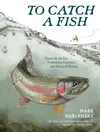
To Catch a Fish 2026
For as long as there have been humans, there have been humans trying to catch fish. The two species—fish and man—live in constant tension. One chases the other. One tries to get away. Some of...
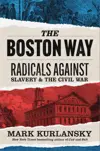
The Boston Way 2025
Has there ever been good violence or a good war? The American Civil War is likely considered to be so since there seemed to be no alternative. Or was there? Before the war, Bostonian abolitionist...
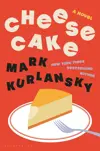
Cheesecake 2025
West 86th Street knows its desserts. It’s the 1970s, and poppyseed strudel, praline ice cream cake, and New York cheesecake are as integral to Manhattan’s Upper West Side as clustered pigeons, suited...
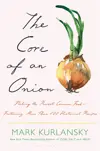
The Core of an Onion 2023
As Julia Child once said, “It is hard to imagine a civilization without onions.”
Historically, she’s been right—and not just in the kitchen. Flourishing in just about every climate and culture...
The perfect gift for writers. By a series of coincidences, Mark Kurlansky’s life has always been intertwined with Ernest Hemingway's legend, starting with being in Idaho the day of Hemingway’s death....
Paper 2016
Paper is one of the simplest and most essential pieces of human technology. For the past two millennia, the ability to produce it in ever more efficient ways has supported the proliferation of...
Award-winning New York Times-bestselling author Mark Kurlansky takes us back to the food and eating habits of a younger America: Before the national highway system brought the country closer together;...
Nonviolence 2008
In this timely, highly original, and controversial narrative, New York Times bestselling author Mark Kurlansky discusses nonviolence as a distinct entity, a course of action, rather than a mere state...
The Big Oyster 2007
For centuries New York was famous for this particular shellfish, which until the early 1900s played such a dominant a role in the city’s life that the abundant bivalves were Gotham’s most celebrated...
1968 2005
To some, 1968 was the year of sex, drugs, and rock and roll. Yet it was also the year of the Martin Luther King, Jr., and Bobby Kennedy assassinations; the riots at the Democratic National Convention...
Salt 2002
Homer called salt a divine substance. Plato described it as especially dear to the gods. Today we take it for granted: a common, inexpensive substance that seasons food or clears ice from roads. But...
Straddling a small corner of Spain and France in a land that is marked on no maps except their own, the Basques are a puzzling contradiction—they are Europe's oldest nation without ever having been a...
Cod 1998
The great codfish: root of revolutions and wars, centerpiece of diets and economies, and the foundation of North American settlement. To the millions it has sustained across the world, it's been a...